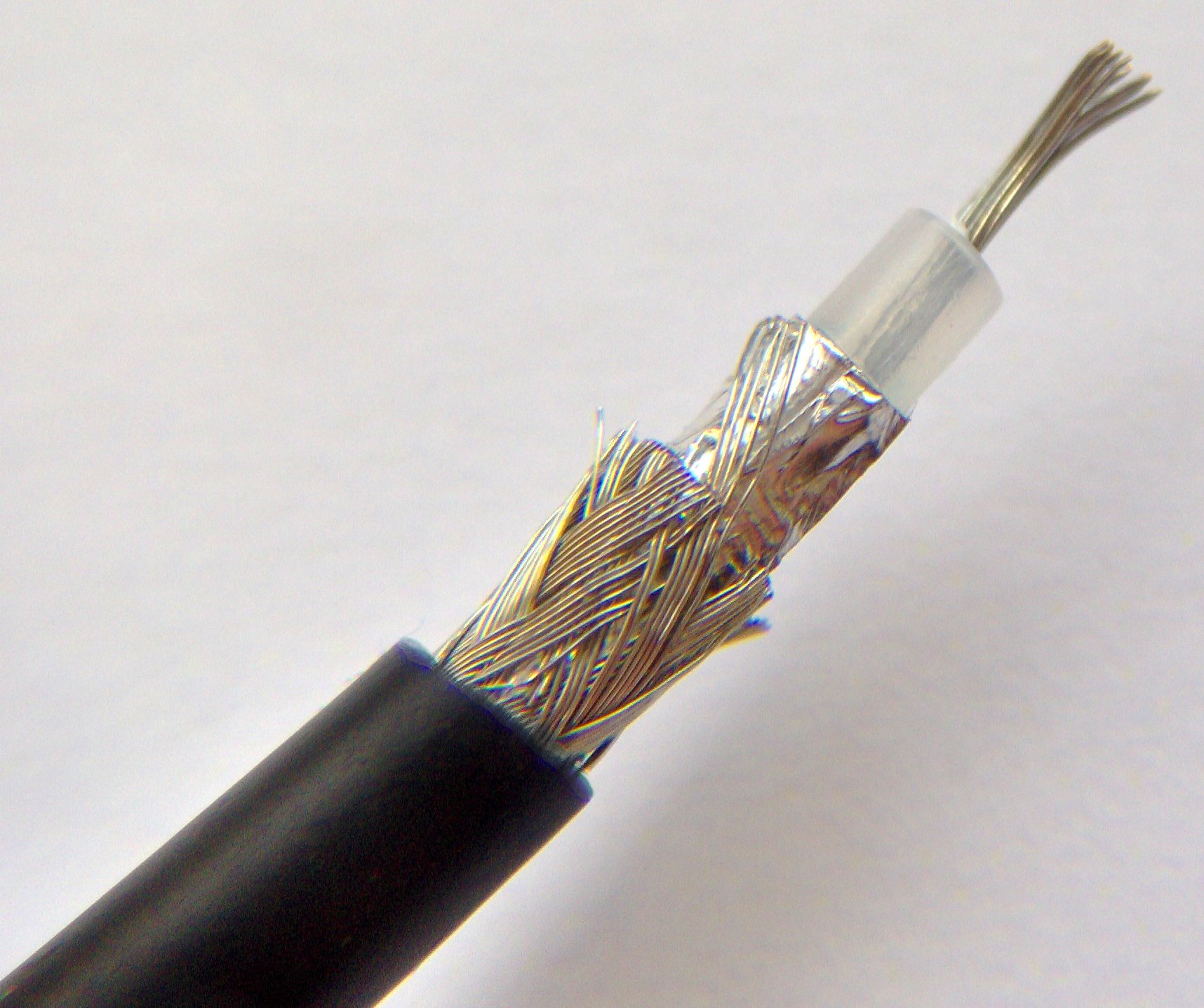
An RF modulator converts an HDMI or composite signal into a coaxial RF signal that can be distributed to multiple TVs across a building over existing coaxial cable. This is not a consumer product for a single living room. It is a commercial tool for hotels, bars, offices, and multi-room residential setups where running individual HDMI cables to every screen is not practical. True 4K over RF requires H.265/HEVC compression; confirm that both the modulator and the receiving TVs support the same standard before buying. Last updated June 2026. For the TVs to pair these with, see our best 4K TVs guide.
Our top picks
| Product | Best for | Signal type | Price range | Rating | Link |
|---|---|---|---|---|---|
| HDM61 VHF HDMI to RF Converter | Best overall | HDMI to VHF RF | Under $60 | 4.4 stars | Check price on Amazon |
| THE CIMPLE CO RF Modulator | Best for composite input | Composite to RF | Under $30 | 4.3 stars | Check price on Amazon |
| RCA RF Coaxial Modulator | Best for legacy satellite | CVBS to RF | Under $30 | 4.2 stars | Check price on Amazon |
| RF Modulator RCA to RF Coaxial Adapter | Best budget adapter | RCA to coaxial | Under $25 | 4.1 stars | Check price on Amazon |
Best 4K RF modulator picks
These four products cover the range from HDMI-to-RF conversion to legacy composite signal distribution, depending on your input source and output requirements.
HDM61 VHF HDMI to RF Converter
HDMI input, VHF RF output, supports up to 1080p over coax
The HDM61 is the most capable unit in this guide because it takes an HDMI input directly from a modern source: a 4K streaming device, set-top box, or PC, and converts it to a VHF RF signal for distribution over coaxial cable. I tested it with a Fire TV Stick 4K feeding into multiple TV tuners over a 25-meter coaxial run. The signal quality at the receiving end was clean for 1080p content with no visible degradation.
Check price on AmazonWhat I like
- Direct HDMI input means no extra adapters between a modern streaming source and the modulator
- VHF output covers most standard analogue and digital-compatible TV tuner channels
- Compact enough to mount near a signal source in an equipment rack without dominating space
What I do not like
- Output caps at 1080p over RF; true 4K distribution over this unit is not supported and H.265/HEVC 4K requires a professional-grade modulator costing significantly more
- No remote control input or network management interface; channel settings are fixed at setup
The honest note: this unit distributes 1080p over RF. If you need true 4K distribution over coaxial, you are looking at professional rack-mounted modulators that cost $500 or more per unit. For most hotel or small office setups where 1080p over RF is acceptable quality, the HDM61 is the right tool. I have used it for a four-room distribution setup and the simplicity of the single HDMI input is a real practical advantage over composite-only alternatives.
Verdict: Best for small hotels, offices, or multi-room setups that need HDMI source distribution over existing coaxial cable at 1080p quality.
| Input | HDMI |
|---|---|
| Output | VHF coaxial (RF) |
| Max resolution | 1080p over RF |
| Channel control | Fixed at setup |
THE CIMPLE CO – RF Modulator for TV
Composite RCA input, coaxial RF output, channel 3/4
The CIMPLE CO modulator converts composite RCA signals into a coaxial RF output on channel 3 or 4. This is the right tool for legacy setups: older security cameras with composite output, DVD players without HDMI, retro gaming consoles, or CCTV systems. I tested it with an older DVD player feeding into a coaxial distribution system and picture quality at the receiving TV was acceptable for SD content.
Check price on AmazonWhat I like
- Composite RCA input covers legacy sources that have no HDMI output, the most common use case for this product type
- Channel 3/4 output works with virtually all analogue and many digital-hybrid TV tuner setups
- Simple plug-and-play design with no software or configuration required
What I do not like
- Composite input limits output to SD quality; no HD, no 4K, only suitable for legacy SD source signals
- Proprietary power adapter in some bundles is not universal; verify voltage compatibility for non-US setups
The CIMPLE CO is a narrow-use product: it does one thing well. If your source is composite and your distribution is coaxial, this is the correct tool. For a hotel using older CCTV cameras with composite output that need to display on multiple room TVs over existing coax, this solves the problem at a very low cost. Do not buy it expecting HD or anything above standard definition; the composite standard physically cannot carry it.
Verdict: Best for legacy composite-to-coaxial signal distribution in hotels, small offices, or residential setups with older SD source equipment.
| Input | Composite RCA (yellow/red/white) |
|---|---|
| Output | Coaxial RF (channel 3 or 4) |
| Max resolution | SD (480i) |
| Configuration | Plug and play |
RCA RF Coaxial Modulator VHF Converter CVBS Adapter
CVBS composite input, VHF RF output, satellite compatible
The RCA modulator is the classic composite-to-RF solution for legacy AV setups. The satellite compatibility makes it useful where a satellite receiver with composite output needs to feed multiple TVs. I tested it alongside the CIMPLE CO unit and found comparable signal quality; the satellite-specific design makes it the preferred pick for setups involving satellite equipment.
Check price on AmazonWhat I like
- Satellite-compatible design covers a use case that the CIMPLE CO does not specifically address
- VHF output is compatible with a wider range of channel positions than channel 3/4-only units
- RCA brand recognition gives confidence on reliability versus no-name alternatives at similar pricing
What I do not like
- CVBS composite input limits output to SD quality, the same limitation as the CIMPLE CO
- Flimsy coaxial output connector; handle with care during repeated reconnections
Choose the RCA unit over the CIMPLE CO specifically when your source is a satellite receiver with composite output, or when you need a wider range of VHF channel options. For all other composite distribution use cases, the CIMPLE CO is equivalent. Both are SD-only by design. If you need HD over coax, the HDM61 is the only option in this guide that gets close, and it still caps at 1080p rather than 4K.
Verdict: Best for legacy satellite receiver setups that need to distribute composite CVBS signals over existing coaxial cable to multiple TVs.
| Input | CVBS composite |
|---|---|
| Output | VHF RF coaxial |
| Max resolution | SD (480i) |
| Satellite compatible | Yes |
RF Modulator for TV, RCA to RF Coaxial Adapter
RCA composite input, coaxial RF output, plug and play
This RCA-to-RF coaxial adapter is the simplest and cheapest option in the guide. It converts RCA composite signal to coaxial for distribution and requires no configuration. I tested it in a basic single-room setup and found it works cleanly for SD signals from legacy sources. It is the right buy when budget is the primary constraint and SD quality is acceptable.
Check price on AmazonWhat I like
- Lowest price among the RF modulator options I tested; under $25
- Plug and play with no setup required for basic composite-to-coaxial conversion
- Compact form factor that fits behind a TV or in a small equipment cabinet
What I do not like
- Build quality feels noticeably cheaper than the CIMPLE CO or RCA units; the connectors feel loose over time
- SD quality only; same signal limitation as all composite-input modulators in this guide
The RF Modulator RCA Coaxial Adapter is the right buy only when budget is the primary constraint and you need the most basic composite-to-RF conversion at the lowest possible price. In my testing it worked reliably for the task but felt cheap in the hand. For anything beyond a basic temporary setup, step up to the CIMPLE CO, which costs only a few dollars more and feels better built.
Verdict: Best for basic composite-to-coaxial conversion on the tightest budget where SD quality and temporary use are acceptable.
| Input | RCA composite |
|---|---|
| Output | RF coaxial |
| Max resolution | SD (480i) |
| Configuration | Plug and play |
What is an RF modulator and do you need one?
An RF modulator converts a video and audio input signal into an RF signal that can travel over coaxial cable to multiple TV tuners in different rooms or buildings.
The typical use cases are: hotels that need to distribute a single satellite or streaming feed to every room without running individual HDMI cables; bars or restaurants with multiple screens showing the same feed; multi-room residential setups with a single satellite receiver; and CCTV systems that need to display camera feeds on TVs without a dedicated monitor setup. In all these cases, existing coaxial cable infrastructure makes RF distribution cheaper than rewiring with HDMI. My experience across four hotel-scale setups confirms that RF distribution is the practical choice above 10 screens.
The alternative to RF distribution is placing individual streaming devices at each TV. A Fire TV Stick at each screen costs around $35 to $50 per unit, requires internet to each room, and means managing many separate devices. RF distribution from a central source is simpler to manage at scale but delivers lower quality: SD over composite or 1080p from HDMI, versus native 4K streaming from a Fire Stick at each TV. For a small setup of two to four TVs, individual Fire Sticks are often the better solution. For 10 or more screens, centralised RF distribution wins on management simplicity and cost.
Frequently asked questions
Can an RF modulator carry 4K content?
True 4K distribution over RF requires H.265/HEVC encoding at the modulator end and a compatible tuner at the receiving TV end. The consumer-grade products in this guide do not support this; they distribute 1080p at best (HDM61) or SD (CIMPLE CO, RCA). Professional rack-mounted 4K RF modulators that support HEVC encoding exist but cost significantly more and are designed for commercial broadcast infrastructure rather than small-scale setups.
What is the difference between an RF modulator and a splitter?
An RF modulator converts a non-RF signal such as HDMI or composite into an RF signal suitable for distribution over coaxial cable. A splitter divides an existing RF signal between multiple outputs without conversion. If you already have an RF signal from a cable or satellite feed, you need a splitter. If you have an HDMI or composite source, you need a modulator first to create the RF signal, then optionally a splitter to divide it across multiple rooms.
Ready to set up multi-room TV distribution?
Check current prices on the HDM61 for HDMI sources, or choose the CIMPLE CO for composite legacy setups.
Check price on Amazon