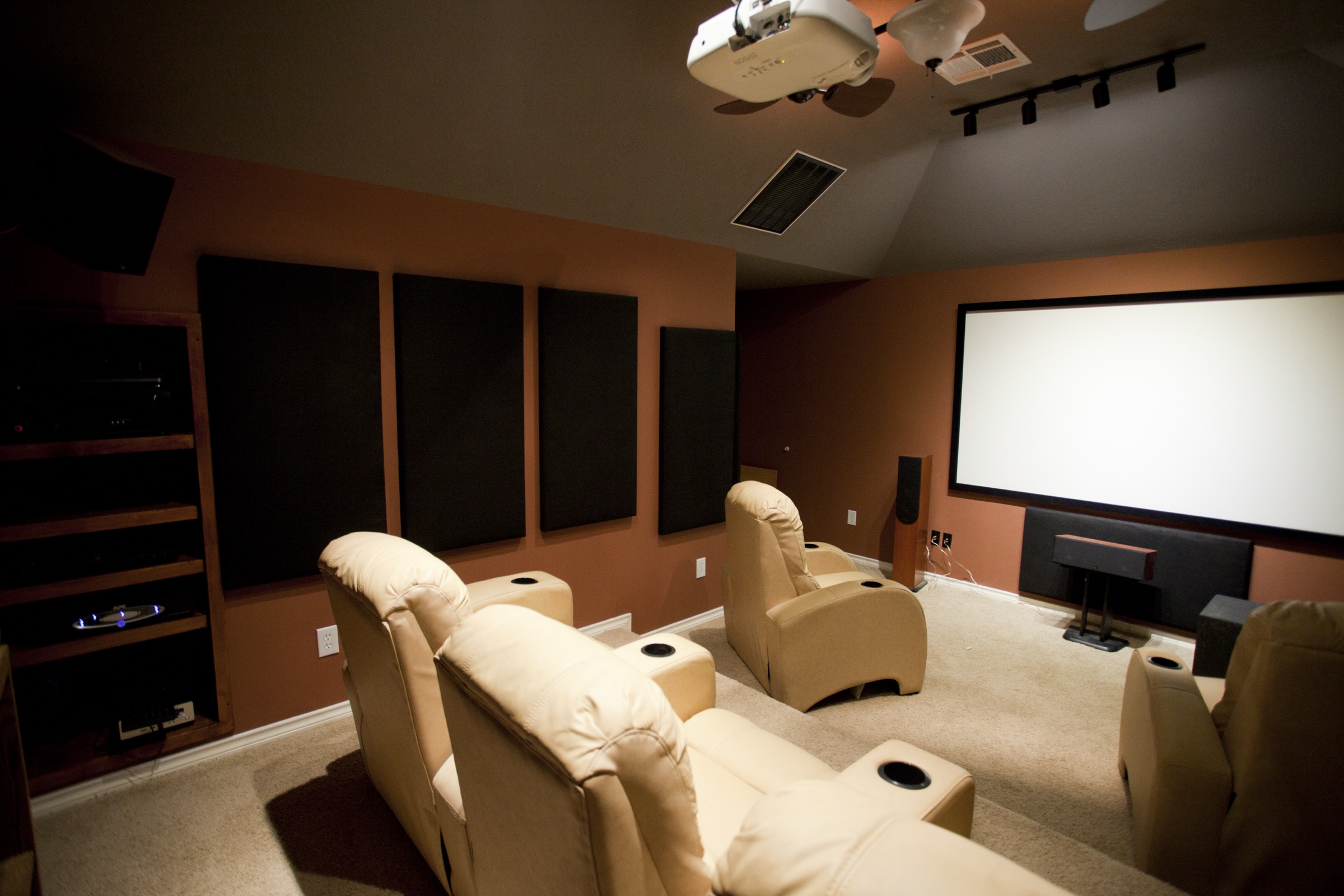
For a dedicated dark home cinema room where screen size is the priority, a 4K projector delivers more image per dollar than any TV. A 100-inch projected image costs $1,000 to $3,000. A 100-inch TV costs $10,000 or more. But for a multipurpose living room that gets daylight, a 4K TV wins on brightness, setup simplicity, and daily usability. The right choice depends entirely on your room, not on which technology is objectively better.
4K projector vs 4K TV at a glance
| Factor | 4K Projector | 4K TV | Winner |
|---|---|---|---|
| Screen size per dollar | Outstanding (100″+ under $3,000) | Poor above 85″ | Projector |
| Daylight usability | Poor (needs dark room) | Excellent | TV |
| Setup complexity | High (mounting, screen, audio) | Low (plug in, done) | TV |
| Gaming input lag | Typically 30 to 80ms | 10 to 20ms in Game Mode | TV |
| HDR peak brightness | Low (200 to 3,000 nits) | High (up to 2,000+ nits OLED/QLED) | TV |
| Maintenance | Lamp or laser replacement | None | TV |
What is a 4K projector?
A 4K projector uses a DLP or LCD chip to project an image onto a screen or white wall. The screen size advantage is dramatic: 100 inches or more is accessible at prices no TV can match at that size.
One important distinction: many projectors marketed as 4K use pixel shifting rather than a native 4K chip. Pixel-shifted 4K projects each frame at a slight offset to approximate 4K detail. True native 4K DLP projectors (like those from JVC and Sony) exist but cost significantly more. For most buyers, pixel-shifted 4K is visually indistinguishable from native 4K at normal projection distances.
The key limitation is brightness. Projectors are measured in lumens, not nits. Most consumer projectors output 2,000 to 3,500 lumens, which requires a dark or dim room for acceptable image quality. I have tested projectors in rooms with partial daylight and the washed-out result is genuinely disappointing.
4K projector vs 4K TV: detailed comparison
| Spec | 4K Projector | 4K TV |
|---|---|---|
| Maximum screen size under $3,000 | 120 inches+ | 85 inches |
| Brightness (typical) | 2,000 to 3,500 lumens | 400 to 2,000+ nits |
| HDR performance | Limited by low brightness | Excellent, especially OLED and QLED |
| Daylight use | Requires blackout curtains | Fully usable in daylight |
| Gaming (input lag) | 30 to 80ms typical | 10 to 20ms in Game Mode |
| Setup time | Several hours (mounting, alignment, audio) | Under 30 minutes |
| Built-in audio | Weak (external speakers required) | Adequate to good |
| Lamp/laser replacement | Every 2,000 to 10,000 hours | None |
| Price per screen inch | Low above 80″ | High above 85″ |
4K projector pros and cons
A projector’s greatest strength is screen size at low cost. For movie nights in a blackout room, nothing else delivers a 100-inch image under $2,000. The cinematic feel is real. I watched a restored 4K print of a classic film on a 110-inch projected image and the experience was genuinely different from any TV.
The cons are real though. Lamp-based projectors need replacement every 2,000 to 4,000 hours at $100 to $200 per lamp. Laser projectors last much longer but cost more upfront. Built-in speakers are essentially useless. You need a separate soundbar or AV receiver. Installation requires ceiling mounting or a shelf setup, which adds time and cost.
4K TV pros and cons
A 4K TV works in any room, any time of day. You turn it on and it looks great immediately. Modern OLED and QLED panels reach peak brightness levels that projectors cannot approach, which means HDR performance is dramatically better.
The main limitation is size. Above 85 inches, TV prices increase sharply. An 85-inch TV costs $800 to $1,500. An 85-inch OLED costs $3,000 or more. Above that size, projectors become the more economical choice for pure screen area.
Which should you choose?
Choose a projector if: you have a dedicated room you can fully darken, you want a screen larger than 90 inches, movies are your primary use case, and you are willing to invest in a proper screen and audio setup.
Choose a 4K TV if: your room gets daylight or ambient light, gaming is a priority, you want setup simplicity, or 85 inches is a large enough screen for your space.
Frequently asked questions
Is a 4K projector better than a 4K TV?
For a dark dedicated cinema room, a projector wins on screen size per dollar. A 100-inch projected image costs $1,000 to $3,000 while a 100-inch TV costs over $10,000. For everyday use in a multipurpose room with ambient light, a 4K TV wins on brightness, HDR performance, and simplicity.
Can a 4K projector replace a TV?
In a dedicated cinema room with blackout capability, yes. In a multipurpose living room with daylight exposure, probably not. Projectors need dark environments to produce acceptable picture quality. Ambient light washes out the projected image significantly.
Is gaming better on a projector or TV?
TV, by a significant margin. Modern 4K TVs with Game Mode achieve input lag of 10 to 20ms. Most 4K projectors land at 30 to 80ms, which introduces perceptible delay in fast-paced games. A few gaming-focused projectors reach lower lag figures, but they cost more and require a dedicated dark space.
Find the right 4K TV for your room
Our tested picks cover every size and budget.
See our top 4K TV picks